



For added peace of mind, Beko large appliances are eligible for our 10 Year Beko Parts Guarantee
Read More
94% of consumers
recommend Beko

We are proudly recommended by 94% of our customers on Feefo, an independent reviews platform with verified feedback.
How Much Do Range Cookers Cost to Run?
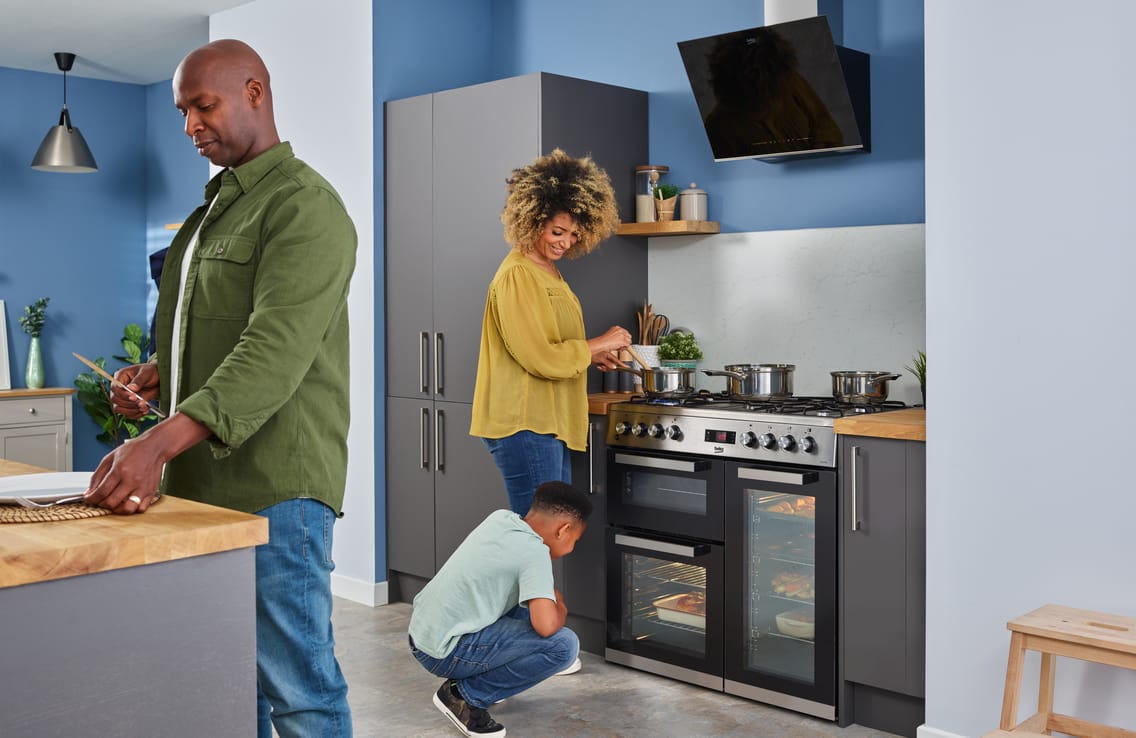
When deciding whether to invest in a range cooker, it's important to consider the running costs as a key factor. Range cookers typically come with a higher initial price tag and require ample kitchen space, making it essential to evaluate whether the significant investment is worth it for your needs.
Knowing exactly how much it costs to run a range cooker is a significant consideration for a consumer, especially if you are aiming to budget in the long-term – but giving the specific costing details can be hard, due to circumstances such as fluctuations in energy prices, for example.
Beyond the cost and size considerations associated with a range cooker, it’s important to consider your cooking habits, as these can have a significant impact on running costs. If you cook occasionally and prepare smaller meals, a standard oven and hob combination may be more suitable for your needs. However, if you frequently cook larger meals or entertain, the additional cooking capacity and flexibility of a range cooker may be useful.
For example, a couple using a range cooker for small dinners will typically have lower running costs than someone using it regularly to prepare larger meals. Running costs will also depend on factors such as the appliance’s energy efficiency, fuel type, your energy tariff and the functions or oven cavities you use.
By considering both your cooking habits and the energy performance of different models, you can choose a range cooker that suits your lifestyle, budget and kitchen.
Breakdown of Running Costs by Fuel Type
There are several factors that come into play when considering the running costs of an electric range cooker versus a gas range cooker – we take a deeper look at those factors below:

Electric Range Cooker Running Costs
Although electric range cookers are often associated with higher energy costs, this depends on the electricity rates you receive.
Modern electric range cookers are available with a variety of cooking technologies, including induction. Induction technology heats the pan directly rather than the surrounding hob surface, helping reduce heat loss compared with a conventional ceramic hob. This also gives you fast, responsive and precise control as you cook.
Additionally, range cookers have an advantage over traditional ovens, as they offer various oven options that allow you to select the cavity best suited to your needs. For example, some range cookers feature tall ovens for cooking multiple dishes at once, while smaller cavities can be used for smaller portions. This flexibility allows you to choose the oven cavity that best suits what you are cooking, which can help avoid heating a larger cavity than needed.
While maintenance costs are a consideration when purchasing a range cooker, electric models typically have fewer moving parts, making them easier to maintain. However, if a heating element does fail, you may face repair costs in the range of £80-£170.

Gas Range Cooker Running Costs
The running cost of a range cooker will depend on a number of factors, including the type of fuel used, your energy tariff and how frequently you use the appliance. Electricity and gas are priced differently, so it is important to consider both energy consumption and current energy prices when comparing running costs.
Gas range cookers may require more regular maintenance, which is a major cost to consider before making your choice. Gas lines will also need to be checked periodically for their safety, a cost that would not be associated with electric models.
It is also worth considering the type of hob included with your range cooker. Induction technology heats compatible pans directly rather than the surrounding hob surface, helping reduce heat loss compared with a conventional ceramic hob. Actual running costs will depend on your appliance, cooking habits and energy tariff and since any range cooker you purchase will include both an oven and hob, it is crucial to consider all aspects of their performance and costs.
By choosing an electric range cooker, you can enjoy a cleaner, healthier kitchen environment with no harmful gas emissions. Research by Which? shows that switching from a gas hob to an induction hob significantly reduces nitrogen dioxide (NO2) levels in your home, eliminating emissions typically released by gas hobs.
Energy Efficiency and Its Impact
Energy ratings also play a major part in determining the running costs of range cookers as they give the consumer an idea of the overall efficiency of a specific appliance.
Energy efficiency labels on range cookers are rated on a scale where A+++ is defined as the most efficient, and D is the lowest efficiency rating you can expect to see. Most range cookers are A or A+ rated.
At Beko, all five range cooker models have an A rating in the UK and the EU.
Tips for Reducing Running Costs
Minimising your energy consumption and selecting a cost-effective model is one of the most important things to ponder before committing to a purchase.
All Beko range cookers offer the flexibility of multiple oven cavities, such as tall ovens for cooking multiple meals at once, or smaller cavities for preparing smaller portions, which can help conserve energy. Additionally, only preheat the oven when necessary and try to avoid opening the door too frequently, as this can cause heat loss and increase cooking time.
Other general cost and energy-saving tips are using a timer to avoid overcooking, planning meals that can be cooked alongside each other due to their need for a similar temperature, and using the range cooker functions correctly.
If you are considering an induction model, induction technology heats the pan directly rather than the surrounding hob surface, helping reduce heat loss compared with a conventional ceramic hob. It also provides fast, responsive and precise control as you cook.
With that in mind, the Beko 90cm Double Oven Range Cooker with 5 Zone Induction Hob combines the cost-effectiveness of an induction hob, and convenience of an electric oven, making it a versatile option for modern kitchens.
Factors Influencing Cost Variations
When assessing the running costs of a range cooker, there are several factors to consider, including the size of the appliance, how often you use it, the oven cavities and functions you use, and your energy tariff.
It is also important to plan the space available in your kitchen and consider how much cooking capacity you are likely to need. Even if you have space for a larger range cooker, choosing a model and using the oven cavity that best suits your cooking needs can help you avoid heating more space than necessary.
When choosing between gas and electric range cookers, consider the appliance specification, your cooking habits and your energy tariff. An electric range cooker with an induction hob can offer fast, responsive and precise cooking control. Induction technology heats the pan directly rather than the surrounding hob surface, helping reduce heat loss compared with a conventional ceramic hob, while multiple electric oven cavities can provide useful flexibility for different cooking needs.
How Much Do Range Cookers Cost to Run FAQs
How do energy ratings impact running costs for a range cooker?
Higher energy ratings, such as A+ or A, mean an appliance has been marked as having great efficiency. However, your actual running costs will also depend on factors such as how often you use the appliance, the functions and oven cavities you use, and your energy tariff.
Does the size of the range cooker affect running costs?
Yes, the size and configuration of a range cooker can affect how much energy it uses. Larger range cookers can consume more energy due to their increased capacity, particularly if larger cavities are used regularly.
However, many range cookers have multiple oven cavities, allowing you to choose the most suitable cavity for the meal you are preparing. Using a smaller cavity for a smaller meal can help avoid heating a larger space than needed, helping you use the appliance more efficiently.
Your actual running costs will also depend on how often you cook, the temperatures and functions you use, and your energy tariff.
Are there ways to reduce energy consumption when using a range cooker?
There are several ways to manage energy use when cooking, including choosing an appliance and oven capacity that suit your needs, checking the appliance’s energy information and using functions appropriately. Avoiding unnecessary preheating and limiting how often you open the oven door can also help reduce heat loss.
Did we answer your question?
We are so sorry we were unable to answer your question. You might be able to find the answer you are looking for in the ‘Related Questions’ below. If your query is still unanswered, please head over to our Contact Us page for further assistance.
Search FAQ’s
Search or browse our frequently asked questions to find the answer to your query.

Need Product Support?
If you have any questions about your Beko appliance, we are here to help. Finding answers and information is easy with Beko’s helpful online resources, simply browse our product support topics below and select the one that is relevant to you.

Manuals
Beko manuals contain helpful information and advice about your appliance.
View Manuals
Parts & Accessories
We stock genuine Beko spare parts and accessories for all of our models.
View Range Now
FAQs
Browse the most asked questions about our product range.
Search FAQs
Repairs
Information on our professional repair services.
View Repairs