



For added peace of mind, Beko large appliances are eligible for our 10 Year Beko Parts Guarantee
Read More
94% of consumers
recommend Beko

We are proudly recommended by 94% of our customers on Feefo, an independent reviews platform with verified feedback.
How To Load A Dishwasher For Best Results
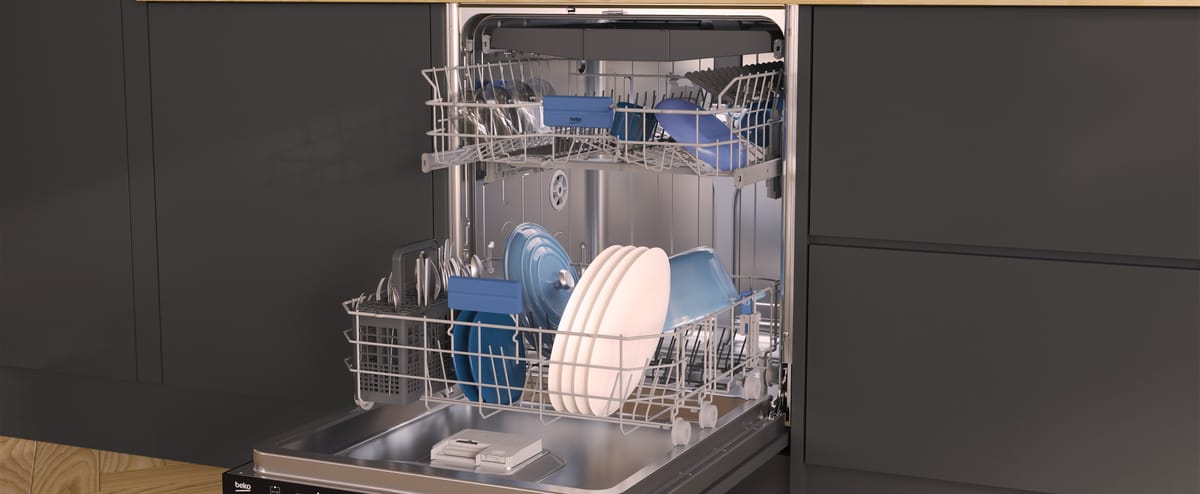
In order to ensure your dishwasher is working at maximum efficiency, it is important to understand how to load your appliance correctly.
Let Beko help you achieve excellent hygiene results at home with our expert dishwasher loading tips. Keep reading to learn what should be placed in each rack or basket of a dishwasher, how certain items should be loaded and which common mistakes to avoid when using your appliance.
Correct way to load a dishwasher per rack or basket

To get the best results, certain items need to be loaded into specific parts of the dishwasher.
Loading the top rack of a dishwasher
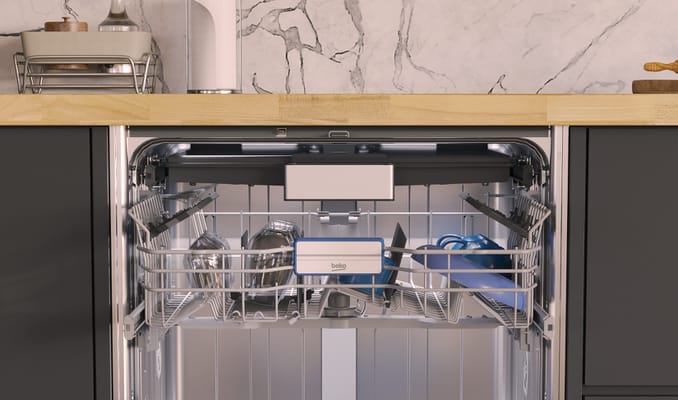
The top rack of a dishwasher should be used for small, delicate and light items, such as cups, glasses and bowls. Use the appliance’s folding racks to hold small coffee cups or to support the stems of your wine glasses.
When washing wine glasses in your Beko dishwasher, make sure to use the specially designed SoftTouch accessory as well. We know the last thing you want to do after a glass of your favourite wine is mindfully wash the slippery glass you used to enjoy it.
By reserving the top rack of your dishwasher for smaller items, you can ensure your dishwasher is working at maximum efficiency, delivering excellent washing results every time. To prevent water accumulation on your dishes, place bowls, glasses and pans upside down.
The top rack of your dishwasher should be used for large silverware and utensils too, while remembering that the height of the upper basket can be easily adjusted to fit taller glasses.
Dishwasher-safe plastics should also be placed in the top basket to prevent warping, as the appliance’s heating element is positioned at the bottom.
Loading the bottom rack of a dishwasher
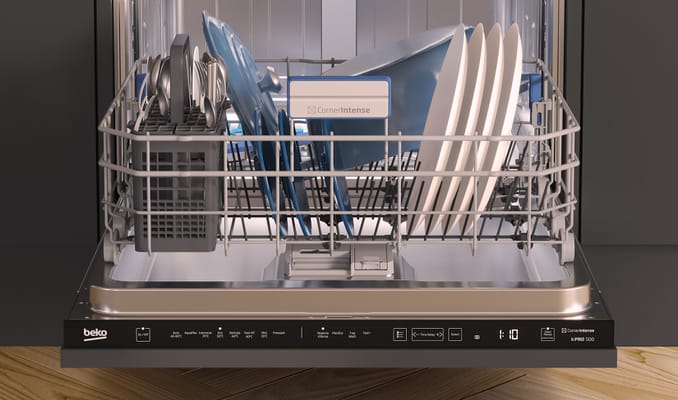
The bottom rack of a dishwasher should be reserved for heavily soiled, larger items, such as dinner plates, large bowls, pots, and pans. Before loading your dishwasher, it is important to scrape off or wipe away any excess food residue on the dishes before placing them into the appliance to ensure a more effective clean and to help prevent blockages.
This is also the part of the appliance where you can put dishwasher safe chopping boards, serving platters and baking dishes.
A dishwasher’s bottom rack also has ample space for items such as grill racks, fridge shelfs or oven trays, using the appliance’s large tray holding accessories where necessary.
How Beko CornerIntense™ dishwashers deliver an unbeatable clean
For outstanding cleaning results no matter where your bowls, dishes, cutlery or cookware are loaded - be sure to check out a Beko CornerIntense™ dishwasher.
Our innovative CornerIntense™ technology features specially designed spray arms that rotate in a unique motion. This allows for water and detergent to get into every corner of the appliance delivering a powerful and thorough clean every cycle.
Discover our full CornerIntense™ dishwasher range today and make the chore of cleaning kitchen items much easier.
How to load a dishwasher effectively
Now that you understand which items to put in the upper and lower racks, next we will advise on how you can load your dishwasher effectively.
Best way to load dishes into a dishwasher
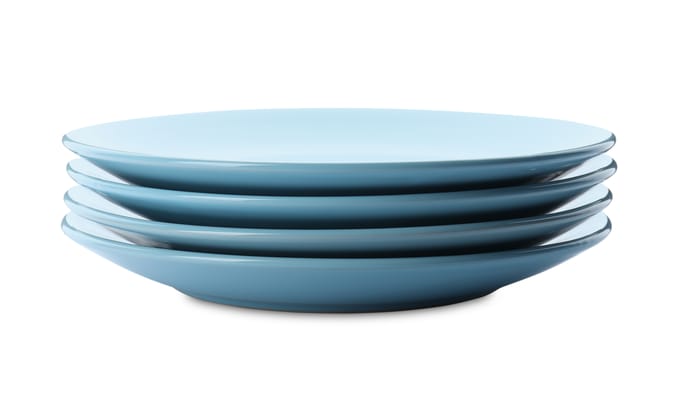
Get sparkling clean dishes every time by following these guidelines when loading them into a dishwasher:
- Ensure all items placed in your dishwasher are marked dishwasher safe.
- Position the dirty side of each item towards the centre of the dishwasher. This ensures the washer jets can effectively spray and clean the most soiled areas.
- Angle dishes downward to help both the cleaning and drying process.
- Alternate the position of large and small dishes so different sizes are placed next to each other – the space created will improve water flow and ensure better coverage during the wash cycle.
- Place larger dishes and pans in the lower basket, ensuring there is enough room to allow proper water circulation between items.
Best way to load bowls into a dishwasher
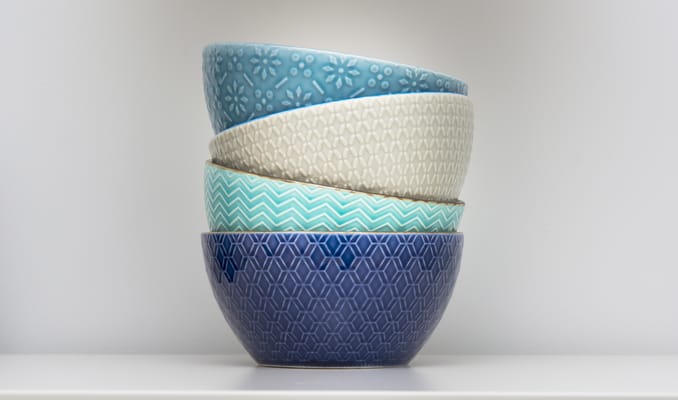
Due to the shape of bowls, make sure you follow these guidelines to ensure they receive the best possible clean when they are loaded into a dishwasher:
- Load small bowls between a dishwasher’s tines to prevent them from nesting or stacking which can hinder effective cleaning.
- Make sure bowls are loaded upside down – as well as helping when drying and draining the items, this will also prevent water accumulation in their bases.
- Mixing bowls (and other larger items such as pans) should be placed at the back of a dishwasher’s bottom rack – positioning them at the front can block detergent from reaching other items.
Best way to load cutlery into a dishwasher
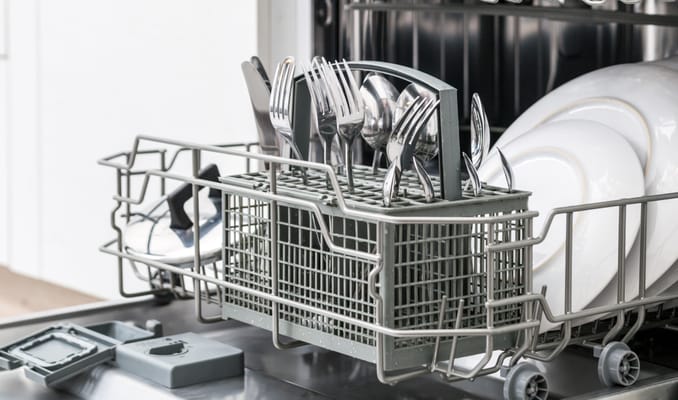
When loading cutlery into a dishwasher, prioritise both safety and optimal cleaning results. Follow these guidelines for effective and safe use:
- Always check that all utensils put into an appliance are dishwasher safe.
- Any sharp items, such as knives, should be loaded with the blade point facing downward in the cutlery basket - this not only helps to avoid accidental injury when unloading a dishwasher but also reduces the risk of bacteria coming into direct contact with the blade.
- Mix up forks and spoons in a cutlery basket - adding all of one type of cutlery to this part of the dishwasher can cause nesting and prevent water from reaching all surfaces and result in less effective cleaning.
- We understand that the cutlery basket may not always meet your washing needs. That’s why many of our dishwashers feature a convenient third cutlery tray - ideal for when you’re entertaining guests or simply need to clean more cutlery. Our latest dishwashers are equipped with a versatile third rack with a dedicated space for long utensils and offers height adjustability, maximising loading capacity and flexibility with every wash.
Things to avoid when loading a dishwasher
By now, you should know how to load a dishwasher per rack or basket properly and how to place different items into the appliance for optimal cleaning.
For consistently effective results time after time, make sure make sure to avoid common mistakes:
- Avoid pre-rinsing items before placing them into a dishwasher, pre-rinsing can hinder the cleaning cycle and wastes water. It is still important to wipe away excess food residue to reduce the risk of the appliance’s filter becoming blocked.
- Only put dishwasher-safe items into an appliance; the following items are not dishwasher-safe:
- Crystal and other delicate types of glassware
- Fine china
- Wooden bowls, chopping boards and utensils
- Pots and pans with wooden handles
- Cast iron cookware
- Non-stick cookware (unless specifically marked as dishwasher safe)
- Place items between the tines, not over them, to ensure proper water flow and thorough cleaning.
- Never double stack items, as this can block water flow and prevent thorough cleaning.
- Avoid overcrowding a dishwasher, as this can restrict the movement of the spray arms and may even cause leaks. Before selecting your programme, manually rotate upper and lower spray arms to check for obstructions and remove any items that prevent their movement. If you’re also wondering how long a dishwasher cycle should take, you can read our full guide.
- Avoid letting any items touch the dishwasher’s spray arms, as this can block water jets and reduce the effectiveness of the cleaning cycle.
- Always unload the dishwasher from the bottom upwards; this prevents droplets from the top rack from falling onto and dirtying items on the bottom rack.
Following these simple steps to loading your dishwasher can free up valuable space and help you get the best cleaning results for your cookware.
Did we answer your question?
We are so sorry we were unable to answer your question. You might be able to find the answer you are looking for in the ‘Related Questions’ below. If your query is still unanswered, please head over to our Contact Us page for further assistance.
Search FAQ’s
Search or browse our frequently asked questions to find the answer to your query.

Need Product Support?
If you have any questions about your Beko appliance, we are here to help. Finding answers and information is easy with Beko’s helpful online resources, simply browse our product support topics below and select the one that is relevant to you.

Manuals
Beko manuals contain helpful information and advice about your appliance.
View Manuals
Parts & Accessories
We stock genuine Beko spare parts and accessories for all of our models.
View Range Now
FAQs
Browse the most asked questions about our product range.
Search FAQs
Repairs
Information on our professional repair services.
View Repairs